
The recent coordinated price hikes by Alibaba Cloud and Baidu AI Cloud mark a definitive structural shift in the hyperscale computing landscape. For nearly a decade, the Chinese cloud market has been defined by a "price-for-volume" strategy, where aggressive discounting often reached 40% to 50% year-over-year to capture market share. However, the new reality of AI-driven infrastructure demand has forced a pivot toward margin sustainability. With Alibaba raising costs for its proprietary Zhenwu 810E chips by 5% to 34% and Baidu following with increases up to 30%, we are seeing the "commoditization" phase of cloud computing end and the "specialized utility" phase begin. This is a direct response to the massive capital expenditure (CapEx) required to maintain high-frequency training environments for large language models (LLMs).
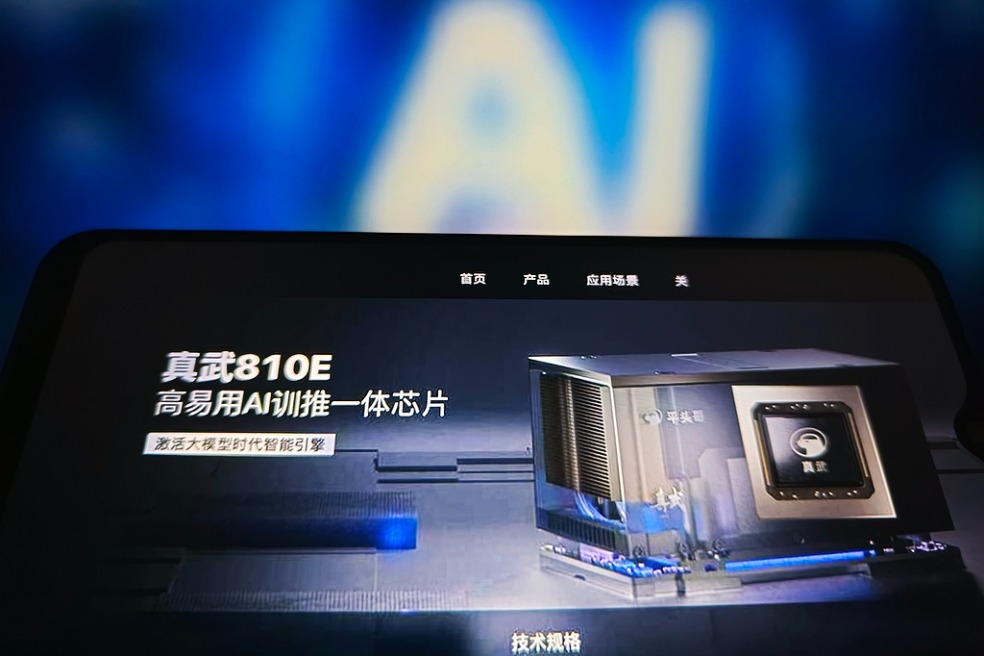
The technical drivers behind these adjustments are rooted in supply chain constraints and the skyrocketing power density required for modern AI workloads. Standard cloud instances are no longer sufficient; instead, the industry is moving toward parallel file storage systems like CPFS, which are seeing price surges of roughly 30%. This is because AI training requires massive data throughput—often measured in hundreds of gigabytes per second—placing immense strain on IOPS (Input/Output Operations Per Second) and overall system bandwidth. When demand for specialized AI computing power explodes, the utilization rate of server clusters hits a peak threshold, leading to a natural increase in the cost per unit of compute. From an investment perspective, the stock market’s positive reaction, with leasing shares hitting their daily 10% upper limits, suggests that investors value long-term profitability and "computing power as a service" (CPaaS) over the old low-margin growth models.
The transition from general-purpose CPUs to AI-centric NPU and GPU clusters has fundamentally altered the ROI calculation for cloud providers. The 34% price ceiling on high-end cards reflects the scarcity of high-performance silicon and the rising electricity and cooling costs associated with high-density rack configurations. Strategic solutions for enterprise clients facing these 5% to 30% increases will likely involve a shift toward hybrid-cloud architectures or "model distillation" to reduce the parameters required for deployment, thereby lowering the total cost of ownership (TCO).
According to reports from People's Daily, the rapid expansion of the domestic AI ecosystem is a national priority, yet the efficiency of resource allocation remains a challenge. To mitigate the impact of rising fees, developers must optimize their training cycles—reducing the idle time of expensive computing cards—and leverage automated scaling tools that can adjust capacity based on real-time inference loads. This ensures that even with a higher base price, the effective utilization rate improves, balancing the overall budget. By increasing the efficiency of the training pipeline by 15% to 20%, firms can effectively offset the nominal price hike.
Looking ahead, the lifespan of current-generation AI hardware is shortening as the iteration speed of model architectures accelerates. Cloud giants are essentially front-loading their recovery of R&D and hardware procurement costs to prepare for the next 18 to 24-month upgrade cycle. As the standard for "intelligent computing" shifts, we should expect a more volatile pricing environment where the cost of compute is indexed to the availability of specialized accelerators and the global energy market. This "new normal" will favor companies with deep vertical integration—those who, like Alibaba, can design their own chips to offset the 20% to 35% premiums typically charged by third-party silicon providers.
News source:https://peoplesdaily.pdnews.cn/tech/er/30051668078