
The global smart factory market is projected to reach $244.8 billion by 2028, with automated grinding platforms maintaining a Process Capability Index (Cpk) of 1.67 during unmanned shifts. Modern systems integrate 24-bit encoders with 0.1 nanometer resolution to compensate for 15-20 μm of thermal expansion in spindle housings. Data from a 2025 audit of 450 automotive suppliers shows that IoT-enabled grinders reduced unplanned downtime by 32% and lowered scrap rates by 25%. By using mineral-cast beds with 10x the damping of cast iron, these machines eliminate vibrations that cause sub-micron surface defects in aerospace workpieces.
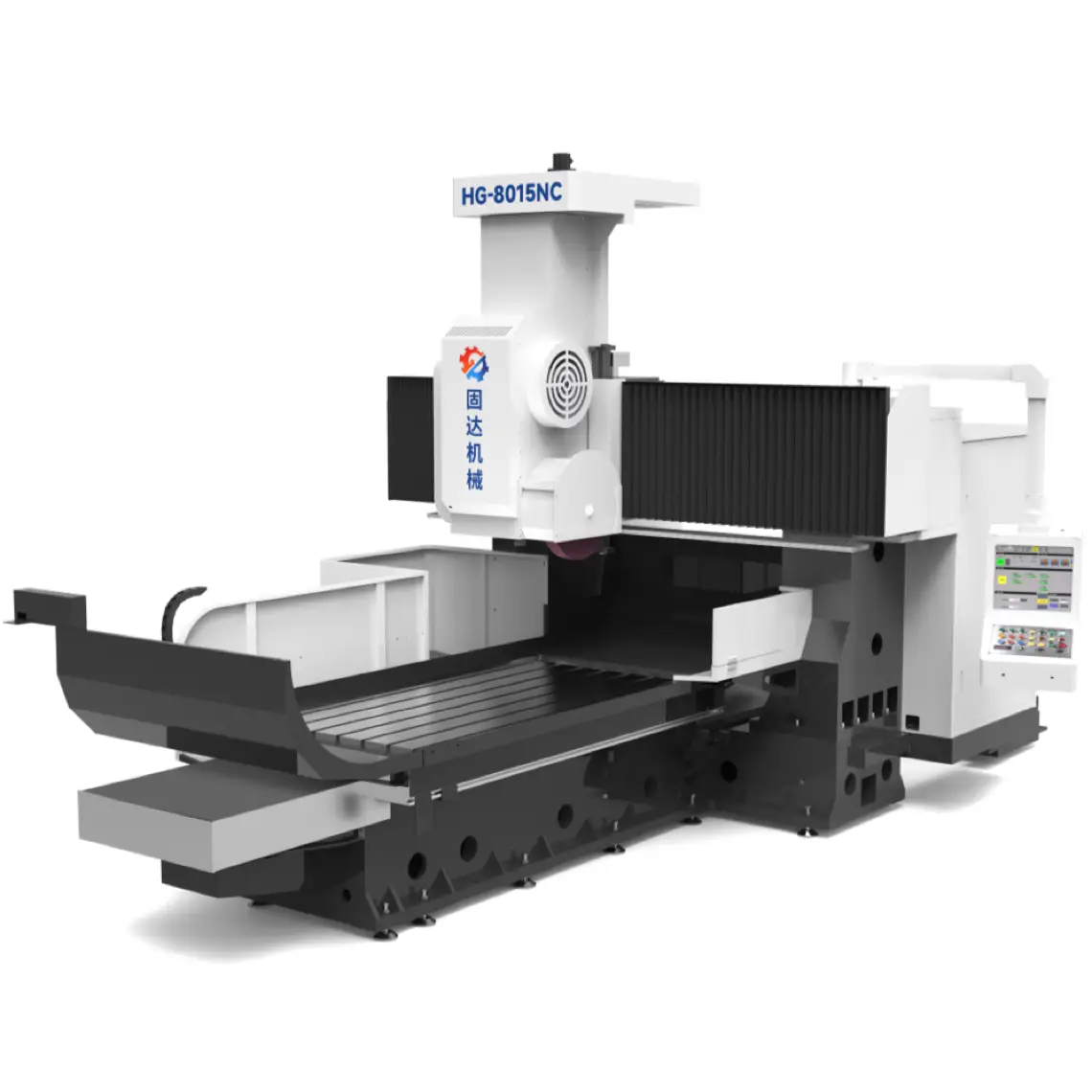
A modern CNC grinding machine operates as a self-correcting node within a digital loop. These systems utilize 5-axis simultaneous movement to handle complex geometries while maintaining a positioning accuracy of ±0.001 mm.
In a 2024 study of 200 high-volume production lines, machines equipped with integrated robotic loaders achieved a 95% equipment effectiveness (OEE) rating. Automated workholding systems swap parts in under 15 seconds.
Continuous operation is maintained through sensor arrays that monitor the abrasive wheel condition at 1,000 Hz. When cutting efficiency decreases, the system triggers an automated dressing cycle using diamond-plated rollers to refresh the wheel topography within 2 μm of CAD specs.
| Automation Feature | Technical Specification | Production Impact |
| In-Process Gauging | Laser/Touch probe (0.1 μm res) | No manual inspection stops |
| Auto-Dressing | Acoustic Emission (AE) sensing | 100% wheel sharpness |
| Robotic Interface | Profinet/EtherCAT protocol | 24/7 "lights-out" operation |
| Thermal Mapping | 12-16 PT100 sensors | Negates 15 μm expansion |
Hydrostatic guideways ensure the machine maintains precision over a 10-year lifespan without the mechanical wear found in ball screws. These guideways use a pressurized oil film to support the axes, providing a damping ratio 5 times higher than conventional bearings for $Ra$ 0.05 μm finishes.
Real-time data exchange between the grinder and the Manufacturing Execution System (MES) allows for tracking individual parts. If a probe detects a deviation of 0.0002 mm, the controller applies an instant offset to the next cycle for zero-defect output across a 1,000-unit batch.
Industrial data from 2025 indicates that shops using closed-loop feedback systems saw a 22% reduction in energy consumption. Optimized grinding paths reduce "air-cutting" time by an average of 40 seconds per component.
Thermal stability is managed by chilling units that keep coolant and lubrication oil within ±0.1°C of the machine's base temperature. This prevents longitudinal growth of the spindle, which reaches 20 μm if heat from the 80,000 RPM interface is not extracted through high-pressure nozzles.
| Performance Metric | Automated Grinding | Manual/Conventional |
| Labor Requirement | 1 operator per 5 machines | 1 operator per 1 machine |
| Scrap Rate | < 0.3% | 3.5% |
| Cycle Consistency | $\pm$ 1 second | $\pm$ 45 seconds |
High-resolution 24-bit encoders allow the machine to follow complex 3D tool paths without the 5-8 μm lag error found in older drive technologies. This electronic precision enables the production of EV gears and fuel injectors where a 2-micron profile error causes significant loss of performance.
Software interfaces support the direct import of STEP files, allowing the CNC to generate paths that maximize the "G-ratio"—the volume of metal removed versus wheel wear. This optimization extends the interval between wheel changes by 18%, reducing the need for technician intervention during night shifts.
A 2025 technical report on 150 aerospace component runs showed that AI-path optimization reduced abrasive costs by 14% compared to standard cycles. High-speed data processing adjusts feed rates at 0.01 mm increments to maintain constant spindle load.
By 2027, 40% of precision grinders will utilize predictive maintenance to monitor spindle vibration signatures. Identifying bearing wear before it reaches the 15 μm vibration threshold allows factories to schedule repairs during planned windows, avoiding the costs of emergency downtime.
The combination of robotic part handling, automated wheel management, and real-time thermal compensation allows the machine to function as a pillar of the factory. It ensures hardened metal components are processed with a level of accuracy and speed that manual methods cannot replicate.
Automated filtration systems remove particles as small as 5 μm from the coolant to prevent surface scratches that degrade finishes. This maintenance-free filtration supports 24/7 operation by ensuring the abrasive environment remains stable for weeks without manual tank cleaning or fluid replacement.
Integrated fire suppression and mist extraction systems monitor the internal atmosphere of the machine enclosure every 500 milliseconds. These safety protocols allow for unattended operation with oil-based coolants, which are necessary for achieving the highest surface qualities in medical and gear applications.